
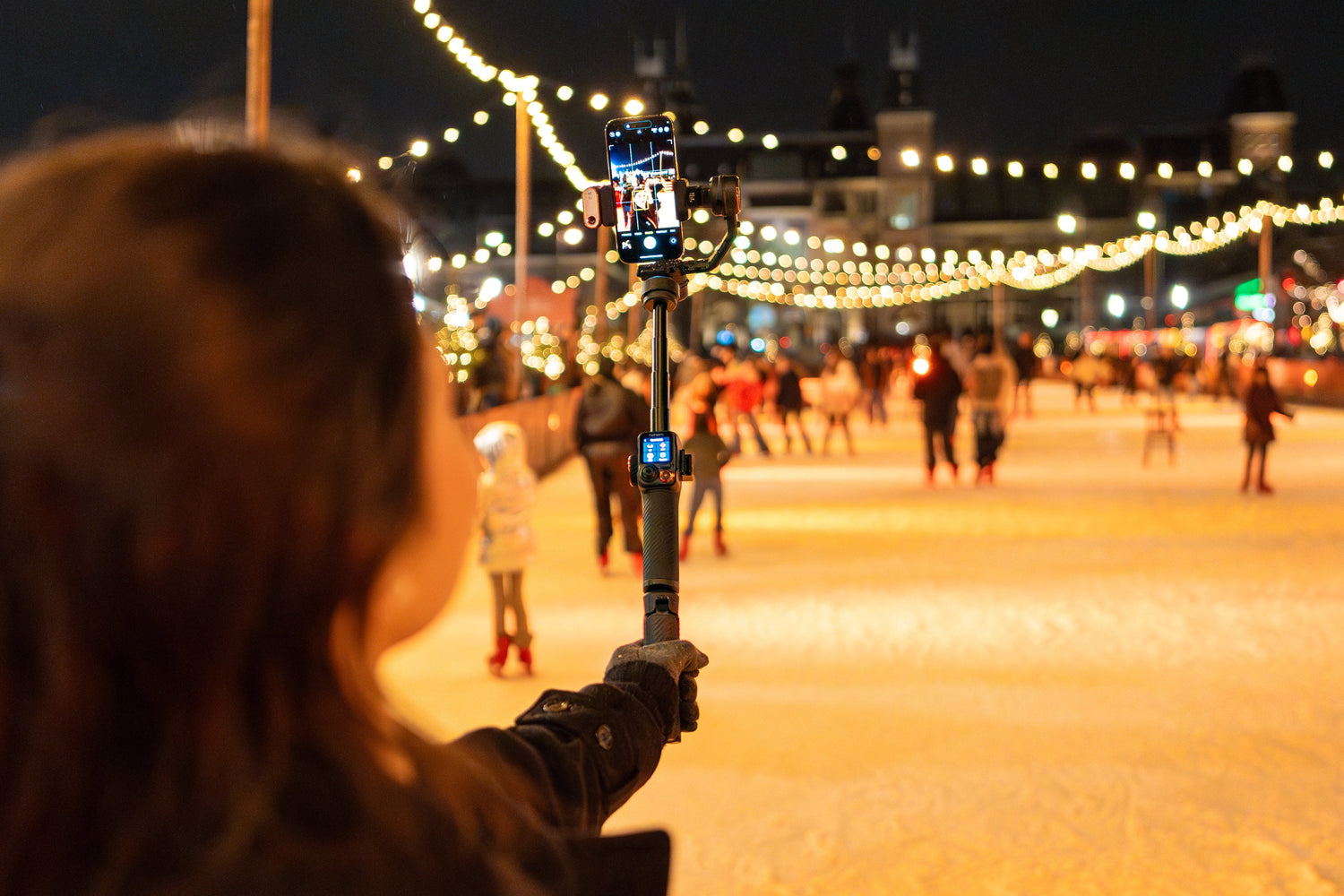
There's something about night content that looks great. Lights, reflections, headlights, signs, and even glow can transform footage into a cinematic spectacle. So night vlogs, city videos, and night reels have become so common among travel, fashion, lifestyle, and urban creators.
But shooting night footage is more difficult than it may seem.
Jelliness is more visible. Blur becomes more common. Details disappear faster. Scenes that look great in real life can be a jumbled mess on video. The trick is that you don't need a crew to achieve these results. By following these tips and tips to set up your gimbal, you can make better, more professional-looking night videos without getting stressed out.
Why Night Videos Are Hard to Shoot
Video at night is tricky due to low-light conditions. With less light, your device has to do more work to see details. This may cause your shutter to slow down, making the blur more obvious and less detailed.
Shake is also more visible at night. During the day, shake is more easily obscured by brighter environments and detail. At night, those same small shakes can make the image feel unstable much faster.
Phones can struggle especially hard here. Built-in stabilization helps, but low-light conditions push mobile cameras closer to their limits. That is why footage that seemed fine when you were recording may look less smooth once you review it.
Night content is still worth shooting. You just need to approach it with more control.
Why a Gimbal Is Essential for Night Filming
At night, a gimbal is particularly useful to address one of the main problems with shooting in low light: shaking.
In low light, smooth motion is more important. A gimbal helps to stabilise the shot and allows for slower, more controlled movement. This is because slow, smooth motion is more cinematic and also allows the camera to render the scene more cleanly.
A gimbal also makes you more confident while walking, tracking, or unveiling a scene. Rather than having to think about all the tiny hand movements, you can think more about composition, pacing, and mood.
For creators trying to film night reels alone, it can also make solo shooting much easier. Stability is not just about image quality. It is about making the whole process more repeatable.
Best Setup for Night Reel
For most creators shooting night reels with a smartphone, the Hohem iSteady M7 is the most natural place to start.

One reason is simple stabilization. Slow walking shots, soft reveal movements, and controlled framing all become easier when the gimbal is doing part of the work for you. At night, that kind of smoothness makes a big difference.
The built-in fill light is another practical advantage. Night environments can look beautiful, but they do not always light your subject well. A small fill light can help lift facial detail or add just enough light for closer content without overpowering the scene.
AI tracking is useful too, especially for solo creators. If you are walking down the street, standing in front of city lights, or filming a night outfit reel and don't want to use someone else to hold the camera, tracking helps.
If you are shooting reels, city vlogs, or travel vlogs on your phone, the M7 is lightweight and has some handy night-time features.
Pro Night Setup for Cinematic Shots
If you are shooting with a mirrorless camera and want a more cinematic low-light result, the Hohem iSteady MT3 Pro opens up more creative control.
A big advantage of a proper camera is low-light performance. Bigger sensors tend to perform better in low light than phones, particularly if you want to capture more detail, control the highlights and shadows.
Lens flexibility matters too. A faster lens can help you get more light and give more control to your urban video. You might need a wider lens for skyline and cityscape shots or a narrower lens for more selective shots.
The MT3 Pro also supports more advanced control for creators who want to treat night videos as more than casual content. If your goal is cinematic travel footage, branded city visuals, or a more filmic urban style, the added flexibility is worth considering.
Cinematic Night Shot Ideas
Night content gets better when you stop filming random clips and start thinking in shot types.
A walking tracking shot works well when you want to follow movement through a street, alley, or crosswalk. This kind of shot creates immersion and makes the viewer feel like they are moving through the city with you.
Light trail shots can add energy and atmosphere, especially near roads, intersections, or busy city areas. These work best when your movement is controlled, and the frame stays steady.
A wide city reveal is perfect for setting the mood. You can start tight on a smaller subject, then slowly pull or pan outward to reveal the larger scene. This kind of shot makes even a simple location feel more cinematic.
You do not need dozens of techniques. A few strong shot types, captured smoothly, will usually outperform a lot of rushed footage.
Tips for Cleaner Night Footage
The simplest tip is to move more slowly. At night, rushing usually hurts image quality. Slower motion looks more intentional and gives your camera a better chance to produce a cleaner result.
Use stable framing. Pick your subject first, then move around that subject instead of waving the camera around and hoping something looks good later.
Avoid overexposure. City lights can trick you into thinking brighter is always better, but blown-out signs, headlights, and reflections can quickly make footage feel harsh. It usually looks better to protect the highlights and let the scene keep some natural darkness.
It also helps to keep your compositions clean. Night scenes can get visually busy, so give your frame a clear point of focus. One subject, one line of motion, or one visual idea per shot is often enough.
Conclusion
Night shots are interesting because they are evocative, dramatic, and rich when done well.
Unfortunately, low light amplifies all your mistakes. So, it is important to have the right equipment and techniques. The gimbal is a tool that helps with shake, slow cinematic shots, and provides greater control in scenarios where your phone's stabilisation may not be sufficient.
For smartphone creators, the Hohem iSteady M7 is a strong choice for better night reels and solo city content. For mirrorless users aiming for more cinematic low-light footage, the Hohem iSteady MT3 Pro gives you more room to shape the look you want.
If you want, I can also turn these into a cleaner CMS-ready format with title, slug, excerpt, and suggested internal anchor text for each link.
Commenta
Nota che i commenti devono essere approvati prima di essere pubblicati.
Questo sito è protetto da hCaptcha e applica le Norme sulla privacy e i Termini di servizio di hCaptcha.