
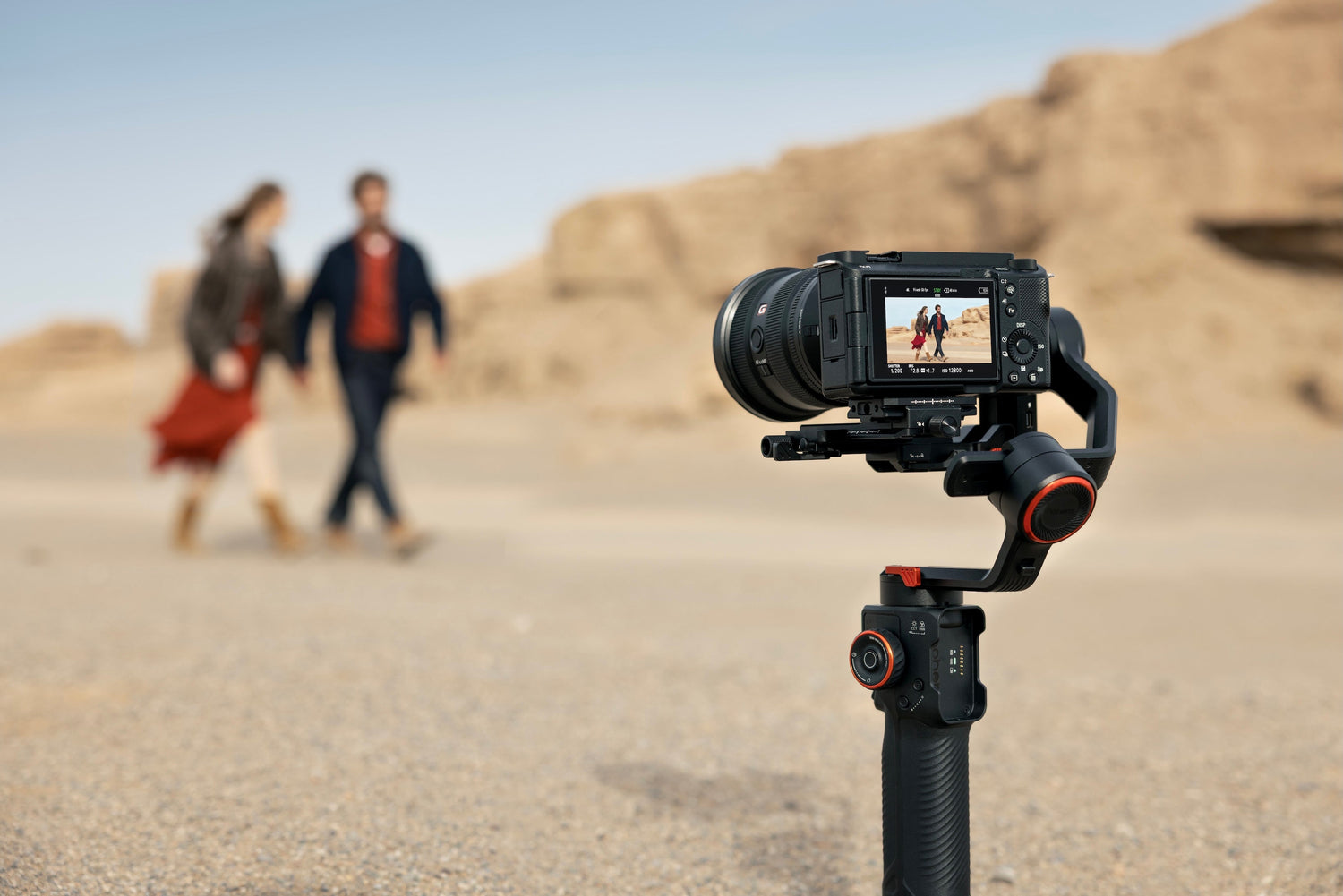
Turn Your Spring Trip Into a Cinematic Story
It is spring and summer travel season again, and so is the urge to capture every moment. Whether surfing, skiing, or enjoying the sunset, your smartphone will be at hand. The only issue is that most of the travel videos become shaky, overexposed, and forgettable.
The problem is never your destination or your phone; it is simply that you checked your recording and it didn't seem as good as real life. It is how you move the camera.
The majority of users just scroll left and right, resulting in flat and unengaging clips. Film travel videos are based on purposeful movement in order to direct the gaze of the viewer and create an emotion.
This is where a smartphone gimbal is something more than a stabilizer. It is turned into a storytelling device.
The five cinematic shots listed below are shots that you can begin to use during your next trip, and the practical means that you can use to accomplish each shot.
Shot 1: The Push-In (The Establishing Shot)

The most significant shots in the travel content are the push-ins. It is a process in which you take your time to get to your subject, be it an impression of a scenic background, a hotel deck chair, or your traveling partner. The shot assists in setting the scene, and the viewer is drawn into the scene at once.
In order to perform it correctly, you should place your gimbal in Pan Follow mode and ensure that your subject is in the middle. The actual variation is the way that you walk.
- Step heel to toe slowly
- Slightly bend your knees
-
Keep your upper body relaxed
This “ninja walk” technique minimizes vertical bounce and creates a smooth, floating effect. When done right, the push-in becomes your go-to opening shot for any location.
Shot 2: The Orbit (The Hero Shot)

The orbit shot is also a depth shot because it goes around your subject, making them well-framed. The background moves naturally as you move, and this creates a parallax effect in the cinema.
This shot is normally a well-coordinated shot. The AI tracking takes away much work with Hohem gimbals, such as the iSteady MT3 Pro or the iSteady V3 Ultra.
Once you activate tracking, the gimbal automatically keeps your subject centered. This allows you to focus on your movement instead of constantly adjusting your framing.
- Walk in a smooth, steady circle
- Maintain a consistent distance from your subject
The orbit is often used as a hero shot because it highlights both the subject and the environment in a dynamic way.
Shot 3: The Fake Drone (The Sweep)

The fake drone shot is an effective method of providing a simulation of an aerial shot without having to utilize a drone. It is ideal in case of traveling when the usage of drones is prohibited or inconvenient.
To achieve this, angle your gimbal downward and extend your reach. If you are using the iSteady M7, the built-in extension pole makes this much easier.
- Extend the pole fully
- Push the camera outward and slightly upward
- Move slowly for a smooth sweeping motion
This technique works best over edges such as balconies, cliffs, or waterfronts. It can also be used to glide over surfaces like sand or grass.
The added height and motion give your footage a sense of scale that instantly feels more cinematic.
Shot 4: The Low-Angle Tracking Shot

The low-angle tracking shot transforms the basic motion into something dynamic and exciting. When you bring the camera near the ground, you exaggerate the movement and produce more sense of speed.
Switch your gimbal into underslung mode and lower it near the ground. Then track your subject as they move forward.
This shot works especially well for:
- Walking feet or boots
- Running pets
- Scooter or bike wheels
Foreground elements like grass or sand passing close to the lens add depth and energy to the shot. Even everyday scenes can look high production with this simple technique.
Shot 5: The Ultra-Wide Reveal
The ultra-wide reveal is ideal for shooting wide landscapes like mountainous areas, coastline, or monuments. It provides you with the ability to capture the scale of a site in one panoramic gesture.
The typical problem with ultra-wide mode is that the gimbal motor may be captured in the frame by mistake. This is capable of spoiling a great shot.
Hohem gimbals solve this with a dedicated ultra-wide mode that adjusts the motor angle automatically. Once activated, you can switch to your phone’s ultra-wide lens and shoot freely.
- Enable ultra-wide mode on your gimbal
- Switch to 0.5x on your phone
- Perform a slow pan or reveal
The result is a clean and immersive shot with no obstructions in the frame.
Conclusion and Gear Check
Great travel footage is not about having the best location or camera. It is about understanding movement and using it intentionally.
Before your next trip, practice these five shots in familiar environments. This helps you build confidence and consistency so that when you arrive at your destination, capturing cinematic footage feels natural.
When it comes to gear, your choice depends on how you create content. Hohem iSteady M7 is perfect for smartphone developers who are looking to use it due to its mobile nature, artificial intelligence tracker, and extended pole capabilities. Conversely, the iSteady MT3 Pro is more appropriate for creators who are used to alternating between smartphones, action cameras, and mirrorless cameras when traveling.
Both of them are introduced to simplify cinematic motion, even when you are in the learning phase.
Final Thoughts
Your travel memories deserve more than shaky clips and basic pans.
With the right techniques and the smartphone, you can turn every trip into a cinematic story that captures not just where you went, but how it felt to be there.
Hinterlasse einen Kommentar
Alle Kommentare werden vor der Veröffentlichung geprüft.
Diese Website ist durch hCaptcha geschützt und es gelten die allgemeinen Geschäftsbedingungen und Datenschutzbestimmungen von hCaptcha.