
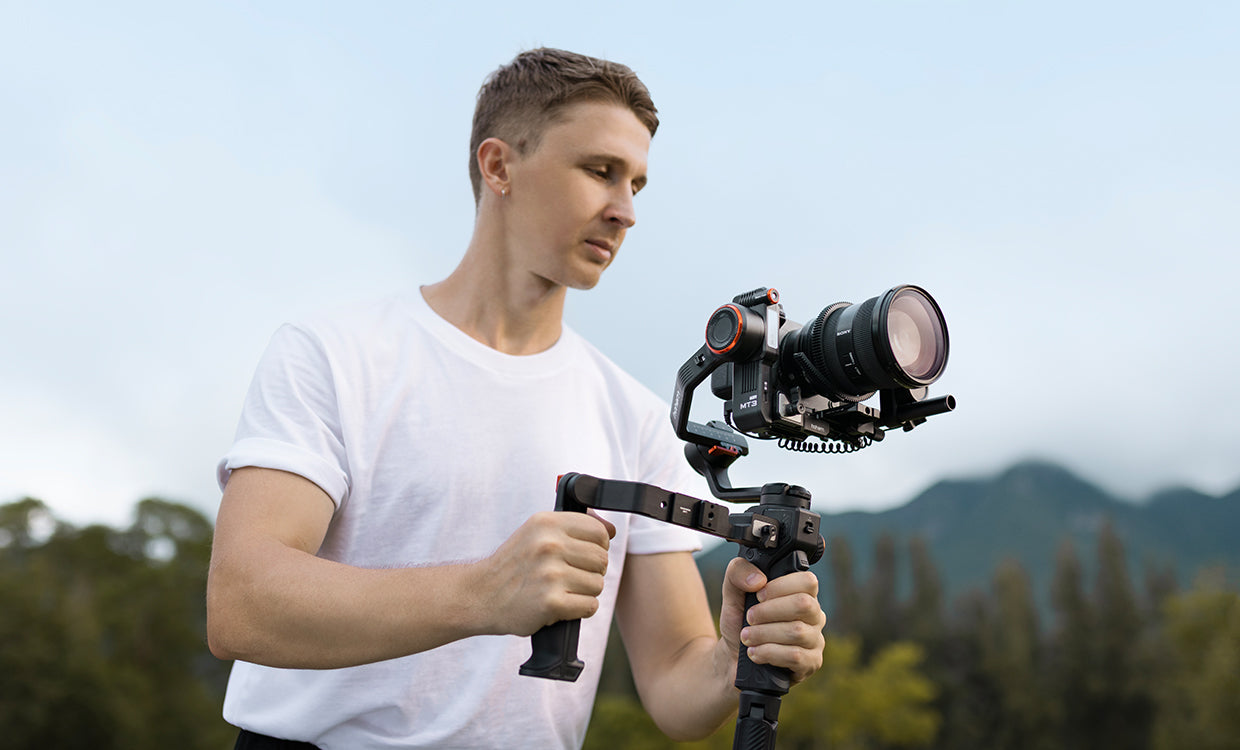
A camera gimbal isn’t just another accessory to throw in your bag—it is the one thing that defines the "energy" of your footage. It’s the difference between a shot that feels shaky and amateur and one that feels intentional and cinematic. Many creators make the mistake of buying based on brand name or a sale price, but the real magic happens in the technical specs. If the mechanics don't match your camera, your footage will suffer.
Why Choosing the Right Camera Gimbal Matters
This guide is designed to strip away the marketing fluff and focus on what actually matters when you’re out in the field: payload, motor strength, and the features that make life easier. To keep things grounded in reality, we’ll use the Hohem iSteady MT3 Pro as our benchmark for what a flagship gimbal should look like in 2026.
Payload: The Foundation of Gimbal Performance

What Payload Really Means
Think of payload as the "heavy lifting" capacity of your gimbal. It’s the total weight of everything you’re mounting—camera, lens, and all the little extras. This number is critical because it dictates how hard your motors have to work, which directly impacts how smooth your shots are and how long your battery lasts.
Real-World Payload Considerations
Mirrorless setups add weight quickly. You might start with a light body, but once you add a zoom lens, a shotgun mic, an ND filter, and maybe an external monitor, you’ve likely added 30% to 50% more weight than you originally planned. If your gimbal is struggling at its limit, your footage will show it.
Why Higher Payload Capacity Matters
Having headroom is a lifesaver. A gimbal with a high payload capacity doesn't have to strain, which means quieter motors, smoother transitions at slow shutter speeds, and a much longer lifespan for the hardware. You want a gimbal that treats your heavy rig like it’s nothing.
Flagship Benchmark: iSteady MT3 Pro
With a 2.5 kg (5.5 lb) payload capacity, the iSteady MT3 Pro is designed to support most modern mirrorless cameras paired with professional lenses and accessories. This makes it suitable for setups like Sony a7S III, Canon R5 II, and Nikon Z8 configurations.
Motors: The Workhorses Behind Smooth Shots
What Gimbal Motors Do
The motors are the "muscles" that fight against gravity and movement across the pan, tilt, and roll axes. Their job is to react instantly so the camera stays level, no matter how much you’re moving.
Why Motor Power Matters
Torque is everything. If the motors are weak, the gimbal will vibrate or lag when you try to do a fast pan. Stronger motors give you that "locked-in" feeling where the camera feels like it’s floating through the air.
Smart Motor Algorithms
It’s not just about brute strength anymore; it’s about brains. Premium systems, like the iSteady 10.0 algorithm found in the MT3 Pro, use smart tuning to adjust power on the fly. With a 40% increase in torque over previous generations, the MT3 Pro stays rock-solid even when you're pushing its weight limits.
Creative Movement & Axis Freedom
Understanding Pan, Tilt, and Roll
These three axes define how freely a camera can move. A gimbal’s axis range and responsiveness directly affect creative flexibility.
Why Full Axis Control Expands Creativity
Greater freedom enables filmmakers to move through tight spaces, execute controlled reveal shots, and maintain smooth orbit movements without abrupt stops.
Advanced Movement in Premium Gimbals
High-end gimbals offer adjustable follow speeds, smooth follow modes, and tight follow modes. The MT3 Pro demonstrates how refined axis control enables precise, cinematic camera movement.

Smart Tracking & AI-Powered Filming
What AI Tracking Adds
AI tracking is like having a silent camera assistant. It keeps your subject perfectly framed so you can focus on where you’re walking. The best part? In 2026, the best tracking is built right into the gimbal, so you don't have to rely on a glitchy phone app.
When Smart Tracking Matters
This is a game-changer for solo creators. If you’re a travel vlogger, an event shooter, or someone filming fast-moving pets or athletes, having a gimbal that "sees" your subject is the difference between getting the shot and missing it entirely.
Benchmark Example
The MT3 Pro camera gimbal features a built-in AI camera that recognizes humans and objects. You can trigger it with a simple gesture, making it incredibly easy to use when you're both the director and the star.
Live Feedback & Remote Control
Why Remote Monitoring Matters
There’s nothing worse than filming a long take only to realize your framing was slightly off. Remote monitoring lets you see exactly what the camera sees, even if you’re standing 20 feet away.

Industry-Leading Implementation
The MT3 Pro takes this further with a detachable live-feed remote. You can preview your shot from about 10 meters away, which makes self-filming or high-angle jib shots much less of a guessing game.
Vertical Shooting & Fast Switching
Why Vertical Video Is Essential
Like it or not, vertical video is the king of social media in 2026. Whether it’s TikTok or Reels, your content needs to look native to the platform.
Mechanical vs Digital Rotation
Never settle for "cropping" in post. It kills your resolution. Mechanical rotation allows you to flip the actual camera, so you get the full quality of your sensor in a vertical format.
Fast Vertical Switching Example
The MT3 Pro features a second-generation fast switch. You can go from a cinematic horizontal landscape to a vertical TikTok shot in seconds, and you don’t even have to rebalance the motors.
Ergonomics & Workflow Features
Features That Improve Usability
A gimbal shouldn't be a chore to use. You want comfortable grips, buttons that sit right under your fingers, and axis locks that make transport a breeze.
Expansion & Accessory Support
Your needs will grow over time. Look for a gimbal with 1/4"-20 screw holes or NATO mounts so you can add lights, monitors, or even follow-focus systems.
Build Design Benchmark
The MT3 Pro is designed for the long haul, supporting Arca-Swiss plates for quick mounting and even the Spot Mini Motor for those who need precise manual focus or zoom control.
Battery Life & All-Day Shooting
Why Battery Life Matters
Gimbal batteries often outlast camera batteries, making runtime critical for uninterrupted shooting.
Standout Performance
The MT3 Pro delivers up to 20 hours of battery life with fast-charge support, enabling extended shoots and quick top-ups during production.
Matching Your Gimbal to Your Shooting Style
- Content creators and vloggers benefit from portability and intelligent features like tracking and live feedback.
- Event and documentary shooters need high payload capacity and dependable stabilization.
- Commercial and narrative filmmakers prioritize strong motors and advanced movement modes.
- Social-first creators need fast vertical switching and responsive tracking.
Spec Sheets Tell Stories, But Use Cases Tell the Truth
At the end of the day, a gimbal’s value isn't found in a list of numbers—it’s found in how it feels when you're three hours into a shoot and need a shot to be perfect. Modern essentials like AI tracking, high payload headroom, and remote control have moved from nice-to-have to must-have.
The Hohem iSteady MT3 Pro is a perfect example of this shift. It’s a tool that respects the craft of filmmaking while embracing the intelligence of the future.
Laisser un commentaire
Tous les commentaires sont modérés avant d'être publiés.
Ce site est protégé par hCaptcha, et la Politique de confidentialité et les Conditions de service de hCaptcha s’appliquent.