
We live in an era where our cameras and phones are smarter than we ever imagined. Advanced EIS, OIS, and AI-driven stabilization are now standard, making it incredibly easy to grab a usable shot for a quick social update or a casual memory.
But there’s a catch: software stabilization is fundamentally reactive. It’s always playing catch-up, trying to fix a mistake—a shake, a bump, a tilt—after it’s already happened. It does this by cropping into your beautiful image, warping the edges, or digitally re-mapping your data. For creators who want to move beyond "usable" and into the realm of truly cinematic, repeatable, and intentional movement, these digital band-aids start to show their scars.
The truth is simple: if you want to control the motion, you have to control the physics. In 2026, the best filmmakers aren't choosing between software and hardware; they’re using a hybrid approach. This is exactly where tools like the Hohem iSteady MT3 Pro come in, bridging the gap between smart tech and physical perfection.
Software Stabilization: Smarter but Reactive
Software stabilization is a game of compromise. It looks at the mess of a shaky frame and tries to smooth it out by cutting off the edges and shifting the image around. While this works for a quick handheld vlog, it’s limited by the size of your sensor and the sheer processing power available.
When you push your gear to the limit—shooting in low light, performing a fast cinematic pan, or moving dynamically—the software starts to struggle. You’ll see that strange, unnatural underwater floating look, or lose precious image quality to a heavy crop. Most importantly, software can only react to your movement; it can't help you guide it. A push-in or an orbit shot needs physical intention, not just digital correction.
Mechanical Stabilization Solves What Software Can’t
Mechanical gimbals address motion at the source. Instead of correcting footage after capture, they physically counteract movement in real time, keeping the camera stable before the image ever reaches the sensor.
This matters in real-world shooting scenarios like walking shots, tracking subjects through complex environments, or filming handheld in low light with slower shutter speeds. In these cases, mechanical stabilization preserves the full sensor output while delivering smooth, natural motion.

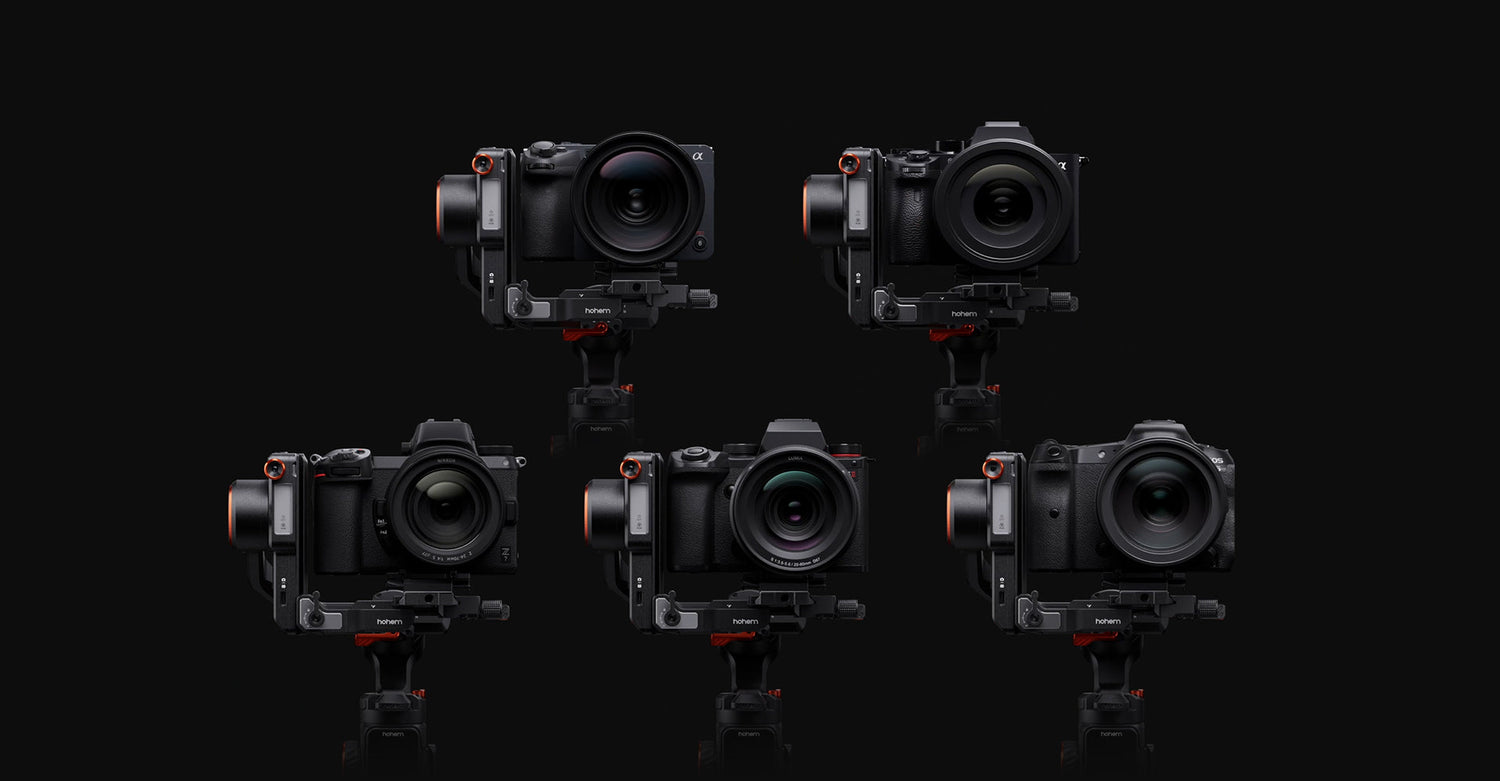
The iSteady MT3 Pro serves as a clear example of this advantage. With a 2.5 kg payload capacity, it supports heavier mirrorless cameras, professional lenses, and fully rigged setups—well beyond the limits where software stabilization alone can remain effective.
Intelligent Filming & AI Camera Movement
The real magic happens when you pair AI brains with mechanical brawn. When your gear can identify and predict where your subject is going, the gimbal can execute a move that feels smooth and human.
The iSteady MT3 Pro uses a 2 MP AI vision sensor that actually "understands" the scene. It’s not just looking for a face; it’s following the soul of the movement. Because this AI is built directly into the hardware, you don’t have to deal with the lag, dropped Bluetooth connections, or app crashes that usually interrupt a creative flow. It just works.

Detachable AI Live-Feed Remote
Remote filmmaking can be a lonely and frustrating process, but the ability to monitor your shot remotely changes everything. Having a detachable AI live-feed remote that works up to 10 meters away is like finally having a camera assistant.
It solves that age-old headache: trying to be the director and the actor at the same time. You can frame your shot, track your movement, and make adjustments on the fly without ever having to run back and forth to the tripod. It’s about giving solo creators the same polish as a full production crew.
AI Tracking for Various Subjects
In 2026, we aren't just filming people. We’re tracking pets, mountain bikes, cars, and products. Standard software tracking is often locked inside a specific app, making it useless if you want to use your camera’s native professional settings.
The iSteady MT3 Pro’s tracking is autonomous. It doesn't care what app you’re using; it locks onto the subject and stays there. Whether it’s a dog running through a park or a car driving by, the framing stays consistent without the latency that usually ruins a high-speed shot.

Fast Vertical Switch for Modern Content
Let’s be honest: vertical video is the language of 2026. Whether it’s for Reels, Shorts, or TikTok, we need to move between horizontal and vertical formats constantly.
Doing this in software usually means cropping a horizontal shot until it’s blurry and low-res. Doing it mechanically means you get to use every single pixel of your sensor. The second-generation fast vertical switch on the MT3 Pro lets you flip your orientation instantly. No rebalancing, no tools, and no wasted time.
Robust Payload Makes Stabilization Reliable
Heavier rigs amplify motion. As cameras, lenses, and accessories add weight, software stabilization and IBIS reach their correction limits quickly.
Mechanical systems need payload headroom to maintain stable performance. Higher capacity allows creators to use professional lenses, external monitors, microphones, and filters without sacrificing motion control.
With its 2.5 kg payload, the iSteady MT3 Pro supports full mirrorless setups under load, delivering stability in scenarios where software-only solutions fail.
Hybrid Stabilization Is the New Standard
Software stabilization continues to advance, but it cannot replace physical motion control. In 2026, the most effective filming setups combine strong mechanical stabilization with intelligent AI systems, real-time tracking, and practical handling features like fast vertical switching.
For creators who demand consistent, cinematic results in real-world environments, mechanical stabilization remains indispensable. Systems that match the capabilities of the Hohem iSteady MT3 Pro represent the new standard—where physical control and intelligent software work together to shape the future of filmmaking.
Commenta
Nota che i commenti devono essere approvati prima di essere pubblicati.
Questo sito è protetto da hCaptcha e applica le Norme sulla privacy e i Termini di servizio di hCaptcha.