
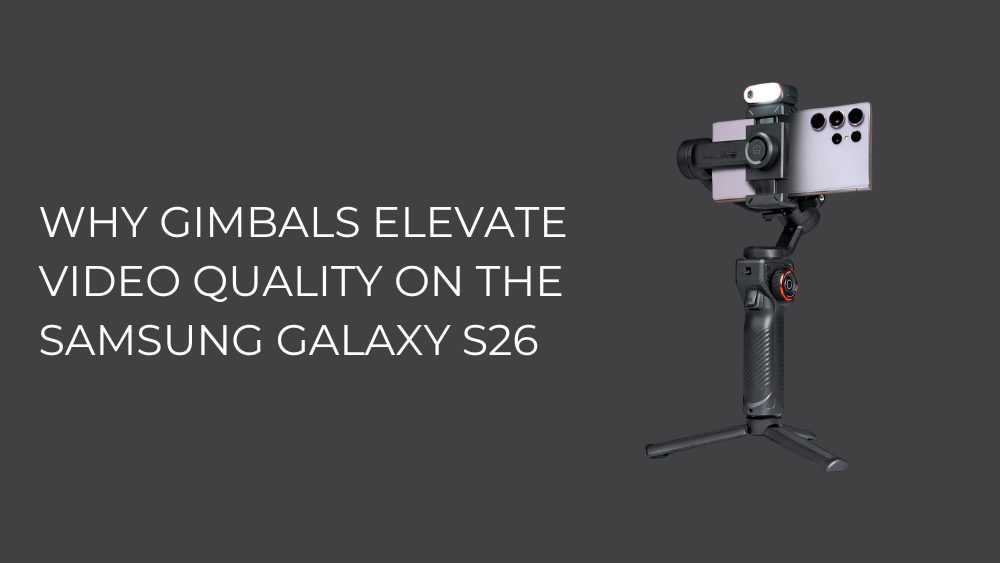
The Samsung Galaxy S26 marks another major step forward in smartphone filmmaking. With further refinements to sensor technology, smarter computational video, and more advanced stabilization algorithms, Samsung continues to blur the line between phones and dedicated cameras. For many users, the S26 can already deliver impressively smooth, detailed footage straight from the hand.
Yet as powerful as the Galaxy S26 is, one truth hasn’t changed: software stabilization alone can’t fully replace physical stabilization. If you want smoother motion, more creative camera movement, and cleaner footage in challenging conditions, a gimbal is still one of the most effective upgrades you can make. That’s why gimbals remain highly relevant in 2026—and why Hohem continues to stand out as a go-to choice for Galaxy creators.
The Galaxy S26: A Serious Video Tool in Your Pocket
Samsung’s Galaxy S26 builds on everything that made previous models popular with creators. Larger and more refined sensors capture more light and detail, while improved low-light processing helps reduce noise and preserve color after sunset. Video bitrates and color profiles have also been enhanced, giving editors more flexibility when grading footage.
On the stabilization side, the S26 benefits from a mature blend of optical image stabilization (OIS), electronic image stabilization (EIS), and AI-powered scene analysis. For static shots, short clips, or casual handheld filming, this system works extremely well. The phone compensates for small hand movements and keeps footage looking steady with minimal effort from the user.
But once you introduce real movement—walking, tracking a subject, or filming at night—the limitations become noticeable.
Where Smartphone Stabilization Still Reaches Its Limits
Even with advanced processing, the Galaxy S26 still faces the same physical constraints as any smartphone camera. Creators often encounter:
- Micro-jitters while walking, especially during longer takes
- Abrupt or shaky fast pans that feel unmistakably handheld
- Increased noise and blur in low light, as EIS crops the image more aggressively
- Limited creative movement, making cinematic shots hard to repeat consistently
These aren’t flaws in Samsung’s technology—they’re simply the result of relying on software to correct motion after it happens. This is exactly where a gimbal changes the game.
What a Gimbal Adds to the Galaxy S26 Experience
A gimbal introduces mechanical stabilization, physically counteracting movement before it reaches the camera sensor. Instead of software reacting to shake, the gimbal prevents much of it from happening in the first place.
This has several immediate benefits:
- Less reliance on digital cropping, preserving resolution and field of view
- Cleaner motion that feels natural rather than “floaty”
- Consistent horizon leveling during movement
- Smoother footage in both bright and low-light environments
For Galaxy S26 users, this means the phone’s powerful camera system can work closer to its full potential.
Cinematic Movement Becomes Intentional, Not Accidental
One of the biggest advantages of using a gimbal with the Galaxy S26 is control. Movement stops being something you fight against and becomes something you design.
With a gimbal, creators can easily achieve:
- Smooth, controlled pans and tilts
- Tracking shots that follow a subject naturally
- Rolling movement without visible shake
- Repeatable camera moves that look professional every time
These are the kinds of shots that instantly elevate travel videos, lifestyle content, and narrative clips.
Creative Tools That Expand What the S26 Can Do
Modern gimbals aren’t just about stabilization. They unlock creative features that are difficult—or impossible—to pull off handheld, such as:
- Motion-lapses and time-lapses with smooth camera movement
- Dolly zoom effects that add cinematic drama
- Subject-follow and object-tracking for solo creators
- Dynamic reveal and orbit shots that add depth and polish
When paired with the Galaxy S26’s strong video capabilities, these tools make smartphone filmmaking far more expressive.
Why Gimbals Matter for Social Media and Low-Light Shooting
Social platforms continue to prioritize smooth, engaging visuals. On YouTube, TikTok, and Instagram Reels, polished motion is often the difference between content that feels amateur and content that feels professional.
A gimbal helps Galaxy S26 creators:
- Capture smoother walking and talking shots for vlogs
- Produce clean, stable vertical video without frame drift
- Film confidently in low-light settings like night markets, indoor events, or concerts
Mechanical stabilization allows the camera to use slower shutter speeds without introducing blur, resulting in cleaner night footage with less noise.
What to Look for in a Gimbal for the Galaxy S26
Because smartphones keep getting larger and heavier, choosing the right smartphone gimbal matters more than ever. Galaxy S26 users should look for:
- Strong payload capacity to support the phone with cases, lens kits, or microphones
- Intelligent tracking, especially for solo filming and tutorials
- Creative shooting modes like dolly zoom and motion-lapse
- Comfortable ergonomics for long shooting sessions
- Fast setup and intuitive controls for efficient workflows
Why Hohem Gimbals Pair So Well with the Galaxy S26
Hohem gimbals are designed to complement modern smartphone cameras rather than fight against them. Their mechanical stabilization works in harmony with Samsung’s software-based OIS and EIS on the Galaxy S26, helping smooth out motion at the source while preserving image quality—especially important with the S26’s larger sensor, higher video bitrates, and improved low-light performance.
Strong payload support ensures stability even with heavier Galaxy S26 builds, including cases and accessories, making the Galaxy S26 fully compatible with the Hohem iSteady M7 for creators who need extra headroom and full tilt control. Built-in AI tracking also enables hands-free filming across a wide range of apps, not just the gimbal app.
Hohem’s companion app integrates smoothly with Android 14 and above, allowing Galaxy S26 users to quickly connect, calibrate, and access intelligent follow modes, creative shooting features, and seamless vertical or horizontal filming—while still working alongside the native Samsung camera app and supported third-party apps.
Add in long battery life, reliable vertical and horizontal performance, and creator-friendly ergonomics, and it’s easy to see why Hohem gimbals adapt so well to:
- Travel and urban videography
- Social media content creation
- Interviews and talking-head videos
- Low-light events and nightlife filming
Final Thoughts – The Galaxy S26 Still Deserves a Gimbal
The Samsung Galaxy S26 is one of the most capable video smartphones available, but even the best software stabilization has its limits. Mechanical gimbals unlock smoother motion, better low-light performance, and true cinematic control—turning great smartphone footage into professional-looking video.
For creators who want to push their Galaxy S26 further, a gimbal isn’t an optional accessory—it’s a creative tool. And with their strong stabilization, smart tracking, and creator-focused design, Hohem gimbals remain one of the best ways to elevate Galaxy S26 filmmaking in 2026.
Laisser un commentaire
Tous les commentaires sont modérés avant d'être publiés.
Ce site est protégé par hCaptcha, et la Politique de confidentialité et les Conditions de service de hCaptcha s’appliquent.